Artificial intelligence is changing virtually every branch of engineering, and road traffic management is no exception. The technology consistently delivers measurable gains in traffic detection, flow prediction, and signal control. Supporting these AI-based solutions is a mature ecosystem of enabling technologies: digital twin modelling, multi-level co-simulation frameworks, and V2X (Vehicle-to-Everything) communication. Together, they give engineers a fast, reliable path from development to testing to real-life validation. This article, written by engineers at Lillyneir Ltd., who are themselves actively developing AI-based traffic management solutions, offers a concise tour of some of the more compelling state-of-the-art advances in the field.
Simulation, Digital Twins, and Data
Any AI solution worth deploying needs large volumes of high-quality training data. In traffic engineering, simulation is the most practical way to generate that data at scale. Tools such as SUMO (Simulation of Urban Mobility) can model traffic at micro-, meso-, and macro-levels, providing engineers with accurate outputs for everything from a single motorway stretch to a citywide road network. That synthetic data, covering both individual vehicles and the network as a whole, feeds directly into AI training and validation workflows. Multi-objective optimisation adds further requirements: emissions per vehicle or per road segment, accident risk, and fundamental traffic parameters such as density, average speed, and queue length, all of which simulators can produce.
Digital twin technology further improves simulation precision by mirroring the physical parameters of real vehicles as closely as possible. Modern co-simulation environments, where multiple specialised simulators run in concert, create a high-fidelity development sandbox for AI solutions. Game engines such as Unity 3D and Unreal Engine allow engineers to reconstruct complex cityscapes in exceptional detail, providing added context for AI model training.
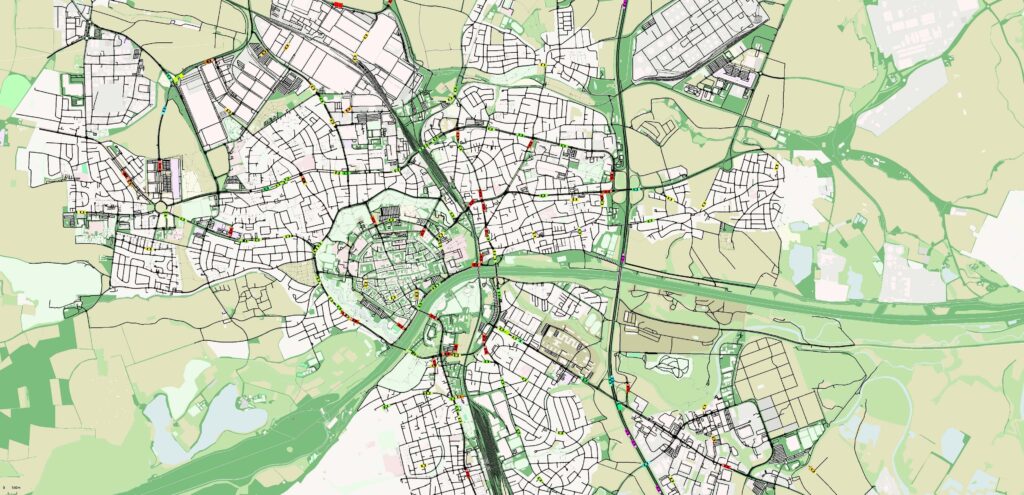
Figure 1: Complex urban network modelled in SUMO traffic simulation software
Beyond simulation, real-world data remains essential. It can come from embedded road detectors, cameras, navigation systems, or aggregated mobile network data. Measured data fulfils a dual purpose: directly training AI models for traffic estimation and forecasting, and calibrating the simulations themselves.
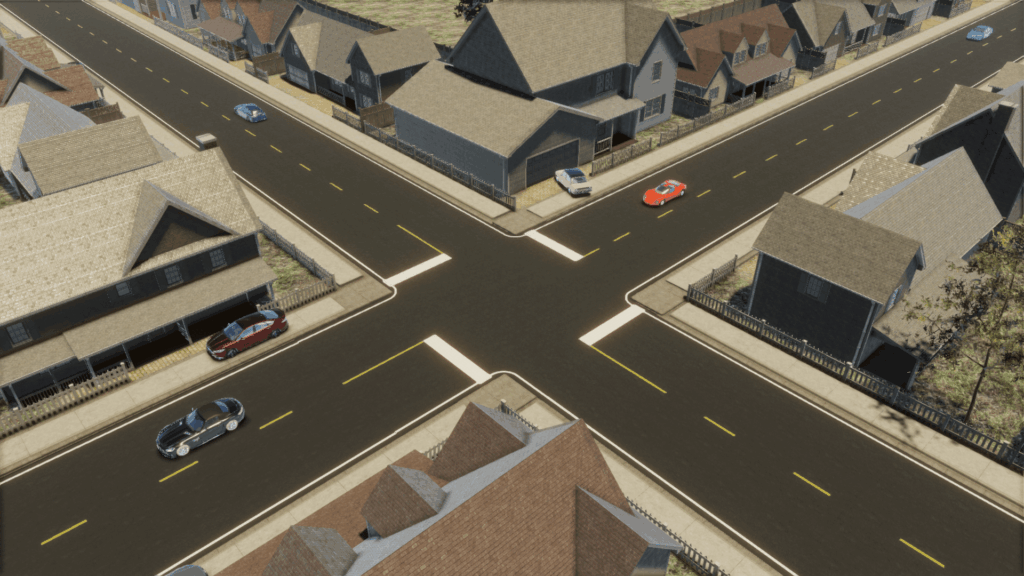
Figure 2: Co-simulation between SUMO traffic simulator and Unity 3D game engine
Urban Signal Control with AI
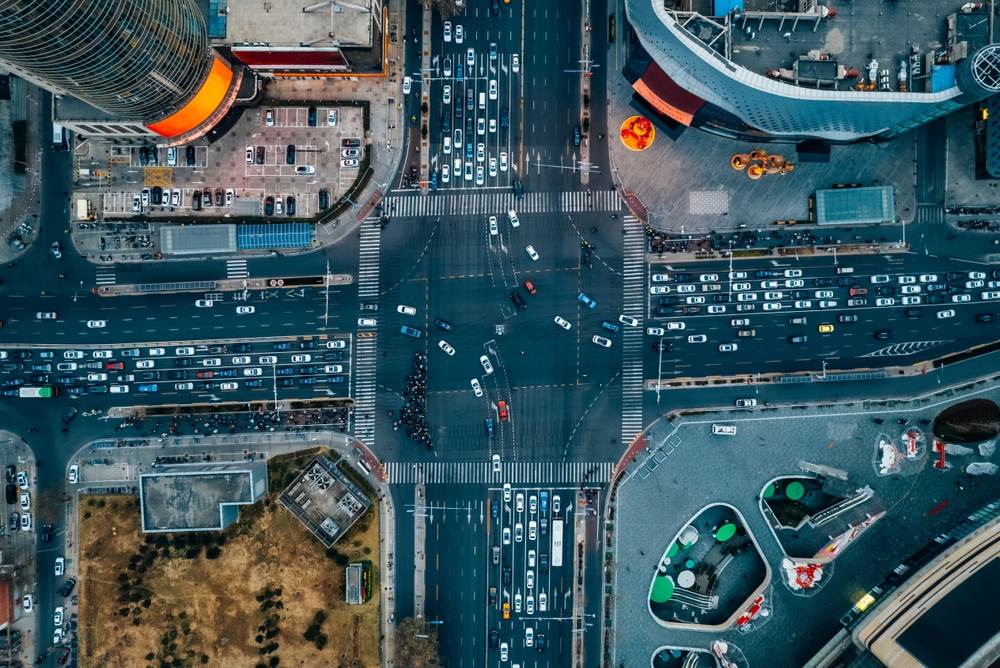
AI-based traffic signal control is already moving from research papers toward physical deployment. The dominant approach in leading international research and industry projects is Reinforcement Learning (RL), which adapts in real time to shifting traffic patterns. The state of the art has moved well beyond isolated intersections. Multi-Agent RL systems now coordinate signals across entire urban corridors to maximise network-level throughput. The most advanced implementations fuse V2X communication data with roadside sensor inputs – cameras and LiDAR – for sharper environmental perception. The most significant recent paradigm shift is the incorporation of physics- and rule-based hard constraints, ensuring that neural network choices cannot violate fixed road safety requirements.
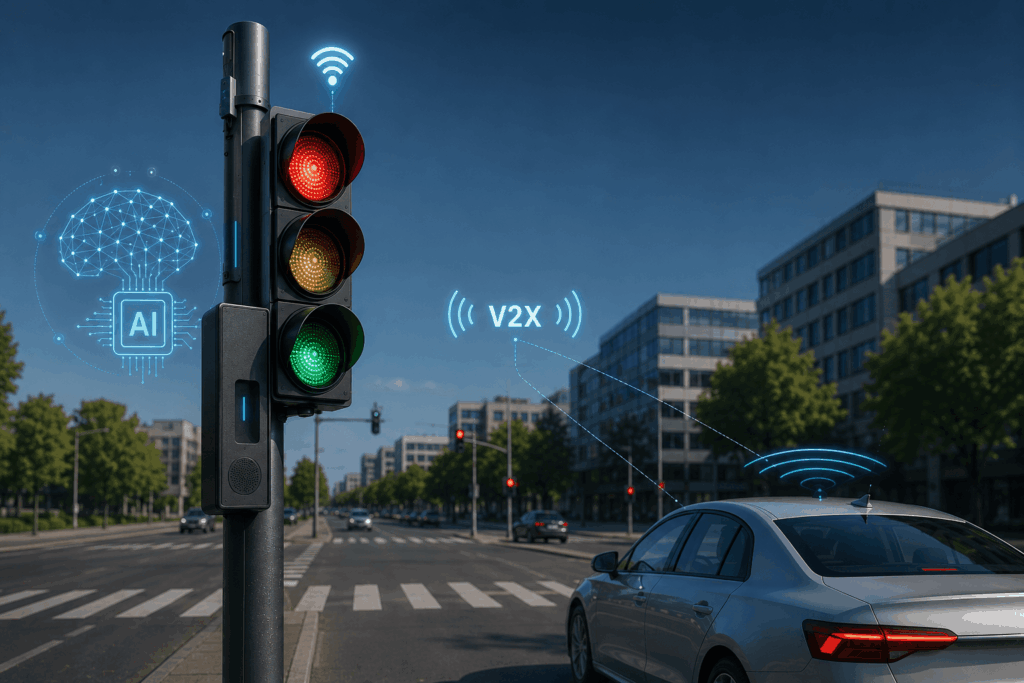
Figure 3: V2X and AI-based traffic signal control
The main remaining challenges are scalability and transfer learning: specifically, how to develop a general-purpose solution that works across several intersection types, and how to deploy a pre-trained AI engine quickly at any new location by fine-tuning a foundation model to the geometry and traffic characteristics of each individual junction. Solving this would radically cut engineering hours.
Multi-Objective Route Optimisation
Route choice is a major challenge for autonomous vehicle networks, where individual preference and collective benefit often pull in opposite directions. The question is how self-driving vehicles should select their routes to serve not just the individual driver (minimising travel time) but also a broader social optimum, reducing congestion and managing the network’s total emissions. AI offers a natural framework for this problem.
In this model, each vehicle operates as an independent learning agent, using deep reinforcement learning to continuously monitor its environment and improve its behaviour based on accumulated experience. The balancing act between individual goals and network-wide efficiency is the core design challenge. When the algorithm decides, it is not simply finding the fastest route for one vehicle; it is learning how that vehicle’s movement helps reduce congestion across the urban network. Research results consistently show that AI-based approaches outperform traditional shortest-path routing, particularly when optimising for social rather than individual metrics.
When Vehicles Communicate: V2X Technology
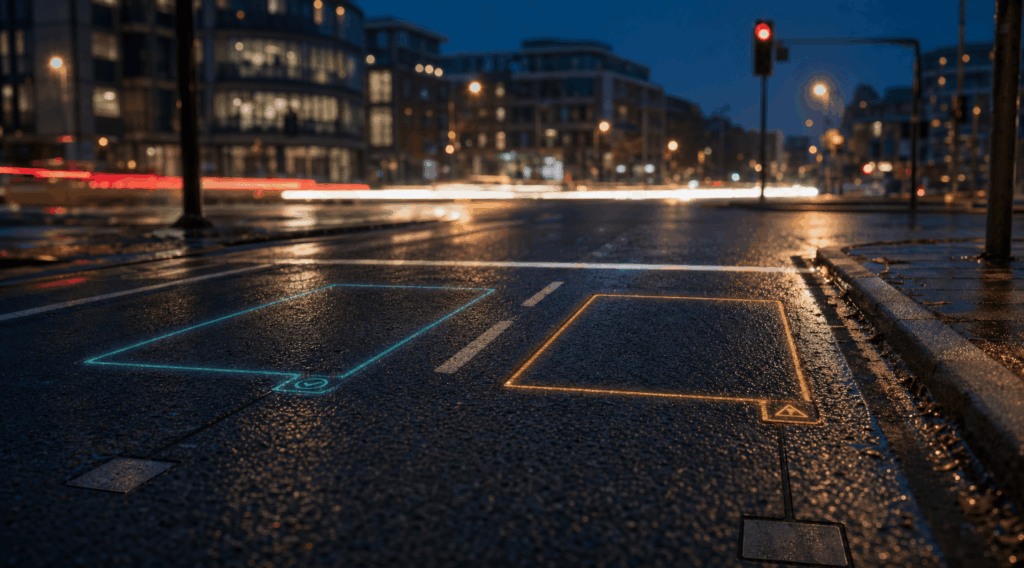
Gathering the volume of real-time data that AI traffic management demands requires a purpose-built communication layer. V2X wireless technology provides exactly that: a standardised, secure framework for vehicles to exchange information with each other and with infrastructure. The latest generation, C-V2X (Cellular Vehicle-to-Everything), extends this connectivity via mobile networks, bringing pedestrians, cyclists, and micromobility users, such as e-scooter riders, into the data-sharing ecosystem. Mobile network coverage means the entire urban environment can be included, with all agents receiving live traffic state information. V2X also enables low-latency exchange of safety-critical data, which is mandatory for autonomous vehicle decision-making and network-level optimisation. As C-V2X deployment scales up in the near term, it will become a core pillar of AI-based traffic management: more data, higher accuracy, greater efficiency.
Context-Aware Solutions: What the Future Holds
The next major leap in traffic management will likely come from integrating Large Language Models (LLMs). Current reinforcement learning algorithms – DDPG (Deep Deterministic Policy Gradient) and MAPPO (Multi-Agent Proximal Policy Optimisation), among them – perform well on numerical optimisation tasks. LLMs add something fundamentally different: the ability to understand complex, semantic context.
An LLM-powered traffic management system could, for example, read and interpret unstructured data feeds, such as news reports about road closures, weather forecasts, or social media posts with traffic implications. Where a conventional algorithm responds only after traffic changes, an LLM can understand the underlying cause of an event and proactively recommend traffic management adjustments before a jam forms.
Widespread deployment still faces real barriers. LLMs are computationally expensive to run, and cloud-based processing adds latency that traffic control cannot tolerate. Edge computing – running the model locally, close to the intersection – is an essential development path. Robustness is the other critical issue: the tendency of current LLMs to hallucinate would represent an unacceptable risk in a traffic management setting, so ongoing research concentrates heavily on hard-constrained output layers, which bound model determinations within mathematically verified safety envelopes.
The most credible way forward is a combined architecture: the LLM handles strategic decision-making and contextual interpretation, while robust reinforcement learning algorithms retain responsibility for safety-critical and tactical operations.
AI Traffic Development at Lillyneir Ltd.
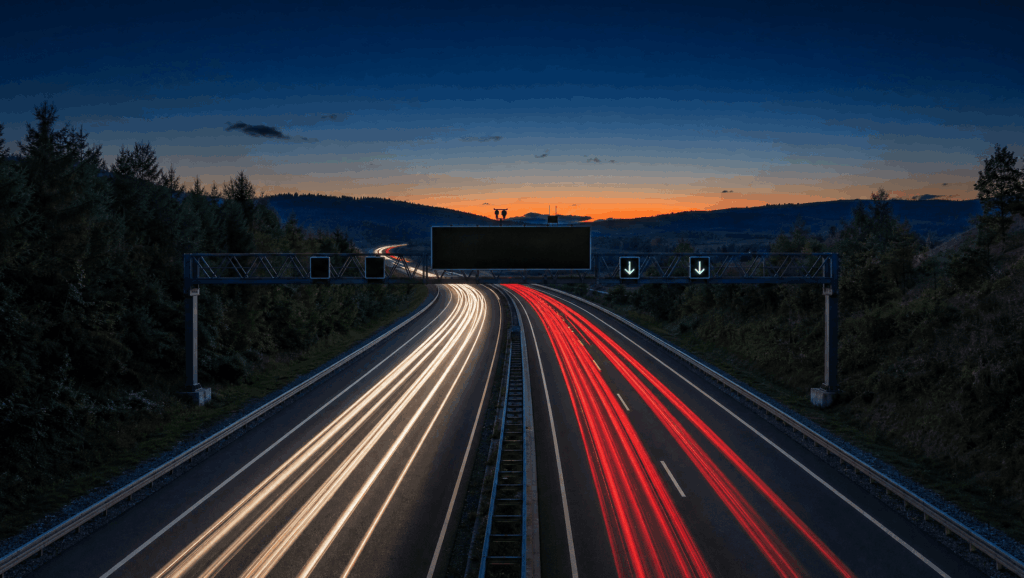
Lillyneir Ltd. is leading the design and implementation of high-tech ITS infrastructure on the M1 motorway between Budapest and Győr – the country’s busiest transit corridor. Alongside lane expansion, the project features a fourth, dynamically controllable ITS lane. Known internationally as “hard shoulder running,” this approach allows the hard shoulder to be used as a traffic lane during peak hours or in incident scenarios, providing flexible capacity precisely when and where it is needed. A digital twin solution is being built as part of this development, simulating the entire system from the traffic management platform down to real-time measurement-based traffic modelling. Safe operation depends on a dense, reliable sensor network, precise traffic detection, software capable of analysing accident risk, and coordinated control of variable message signs. AI runs throughout the system: from automated incident detection and traffic forecasting to decision support for traffic-control interventions.
Lillyneir is also leading a DIMOP PLUS R&D project titled “Development of a Real-Time, AI-Based Complex Traffic Management System.” The project aims to develop a modular, AI-driven traffic management platform that uses real-time data to allow proactive, data-driven interventions in urban traffic control. The system covers infrastructure performance assessment, automatic event detection, and active intervention in traffic flow. Its centrepiece is a vendor-independent middleware-based data platform capable of ingesting sensor data from multiple device types and manufacturers into a unified structure. The platform provides structured storage, continuous preprocessing, and API-based services for traffic management platforms, urban operations centres, and other software modules. A core design priority throughout the project is to ensure the system can interface with existing transport infrastructure using open standards.