Skip to content

Services

References

Blog

Career

About

Contact

EN
EN
HU AR ZH
V2X Communication
AI traffic management
Automated enforcement
Advanced monitoring
Autonomous vehicle ready
Digital twins
  • Services
    V2X Communication >

    Real-time communication between vehicles, infrastructure and traffic systems, enabling safer and smarter mobility networks.

    AI traffic management >

    AI-driven traffic systems optimize flow, reduce congestion and support data-informed transport decisions in real time.

    Automated enforcement >

    Unified AI-powered platform monitors speed, weight and red-light compliance, learning and adapting to traffic patterns.

    Advanced monitoring >

    Continuous surveillance and sensor-driven insights for infrastructure and traffic, improving safety, reliability and decision-making.

    Autonomous vehicle ready >

    Integrated infrastructure designed to support autonomous vehicles, ensuring seamless and secure self-driving operations.

    Digital twins >

    Dynamic digital replicas of physical infrastructure enabling predictive analytics, simulation and real-time operational insights.

    Featured article

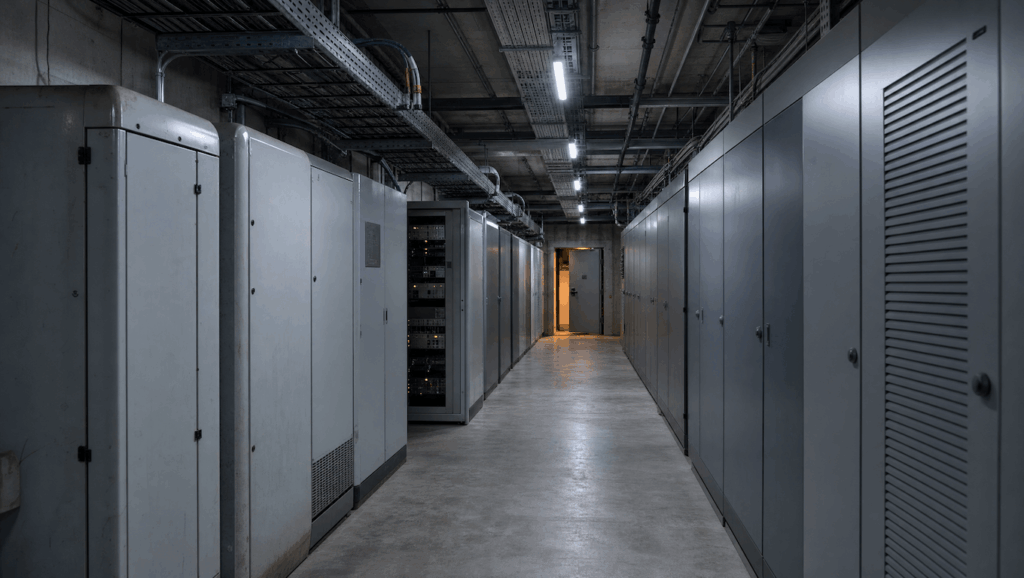
    Why transportation infrastructure needs different cybersecurity: OT security, NIS2 and the EU regulatory baseline

    Transportation infrastructure is critical (essential) infrastructure under EU law. A cyberattack can halt traffic and disable tunnel safety systems, not just leak data - which is why NIS2, the Cyber Resilience Act and GDPR now shape how these OT systems must be designed, not only operated.

  • References
  • Blog
  • Career
  • About
Contact
EN
EN
HU AR ZH

Category: Blog article

Why transportation infrastructure needs different cybersecurity: OT security, NIS2 and the EU regulatory baseline

Why transportation infrastructure needs different cybersecurity: OT security, NIS2 and the EU regulatory baseline

Transportation infrastructure is critical (essential) infrastructure under EU law. A cyberattack can halt traffic and disable tunnel safety systems, not just leak data – which is why NIS2, the Cyber Resilience Act and GDPR now shape how these OT systems must be designed, not only operated.

4 Systems integrator criteria most RFPs overlook – what transportation ITS tenders miss

4 Systems integrator criteria most RFPs overlook

Most transportation ITS tenders score systems integrators on experience and price. The criteria that actually predict integration success – legacy-system depth, post-go-live support SLAs, security by design, and honest scope limits – rarely appear in the tender.

Edge Computing: Why cloud alone isn’t enough for intelligent transport systems (ITS)

Edge Computing: Why cloud alone isn't enough for intelligent transport systems (ITS)

In intelligent transport systems (ITS), edge computing is now a safety requirement, not an option. Learn why cloud-only architectures fall short on the sub-100 ms latency that V2X and signal safety demand.

Digital twins in transportation infrastructure and traffic management: When the ROI really holds up

Digital twins in transportation infrastructure and traffic management: When the ROI really holds up

Digital twin technology delivers measurable ROI in transportation infrastructure and traffic management – but only under specific conditions. A practical framework for road operators and transport authorities to evaluate infrastructure fit, data maturity, and payback.

The real cost of overweight trucks on your roads: the weigh-in-motion (WIM) enforcement ROI case

The real cost of overweight trucks on your roads: the weigh-in-motion (WIM) enforcement ROI case

Overweight trucks cause disproportionate road damage – the fourth power law explains why. Here is what high-speed weigh-in-motion (WIM) and ANPR enforcement mean for your pavement-maintenance budget, axle-load compliance, and weight-enforcement ROI.

Low-Speed vs. High-Speed WIM: A Decision Guide and where OIML R134 low-speed enforcement fits

Low-Speed vs. High-Speed WIM: A Decision Guide

Low-speed (LSWIM) or high-speed (HSWIM) weigh-in-motion? The right choice depends on your enforcement goals, accuracy class and legal framework. A practical guide for transportation authorities – and why an OIML R134-certified LSWIM system is the enforcement-grade anchor.

Artificial Intelligence in road traffic management

AI is reshaping road traffic management from adaptive signal control to multi-objective route optimisation. Engineers at Lillyneir Ltd. break down the state of the art and what comes next.

AI hype is intellectual laziness – Interview with our CTO, Attila Molnár

Lillyneir builds the engineering foundation for intelligent transport infrastructure, where AI serves engineering, not the other way around.

Automated traffic enforcement: 4 questions to ask first

Planning an automated traffic enforcement project? Explore four key questions transportation authorities should ask before deployment, from safety priorities to performance measurement.

5 transportation challenges V2X actually solves

5-challanges-v2x-solves

Discover five transportation challenges V2X actually solves, from road safety and smarter signals to emergency response and autonomous vehicle readiness.

Next →

Ready to shape the future?
Contact our team!

Start your project here
Services
  • V2X Communication
  • AI traffic management
  • Automated enforcement
  • Advanced monitoring
  • Autonomous vehicle ready
  • Digital twins
Company
  • References
  • Blog
  • About
  • Career
  • Contact
  • © 2026 Lillyneir System Engineering Plc. All rights reserved.
  • Privacy Policy
  • Cookie Policy
  • Design by Tasnadi
Manage Consent
To provide the best experiences, we use technologies like cookies to store and/or access device information. Consenting to these technologies will allow us to process data such as browsing behavior or unique IDs on this site. Not consenting or withdrawing consent, may adversely affect certain features and functions.
Functional Always active
The technical storage or access is strictly necessary for the legitimate purpose of enabling the use of a specific service explicitly requested by the subscriber or user, or for the sole purpose of carrying out the transmission of a communication over an electronic communications network.
Preferences
The technical storage or access is necessary for the legitimate purpose of storing preferences that are not requested by the subscriber or user.
Statistics
The technical storage or access that is used exclusively for statistical purposes. The technical storage or access that is used exclusively for anonymous statistical purposes. Without a subpoena, voluntary compliance on the part of your Internet Service Provider, or additional records from a third party, information stored or retrieved for this purpose alone cannot usually be used to identify you.
Marketing
The technical storage or access is required to create user profiles to send advertising, or to track the user on a website or across several websites for similar marketing purposes.
  • Manage options
  • Manage services
  • Manage {vendor_count} vendors
  • Read more about these purposes
View preferences
  • {title}
  • {title}
  • {title}